
VAHREK // GAIA
Any estate.
Six Questions.
One platform answers them all.
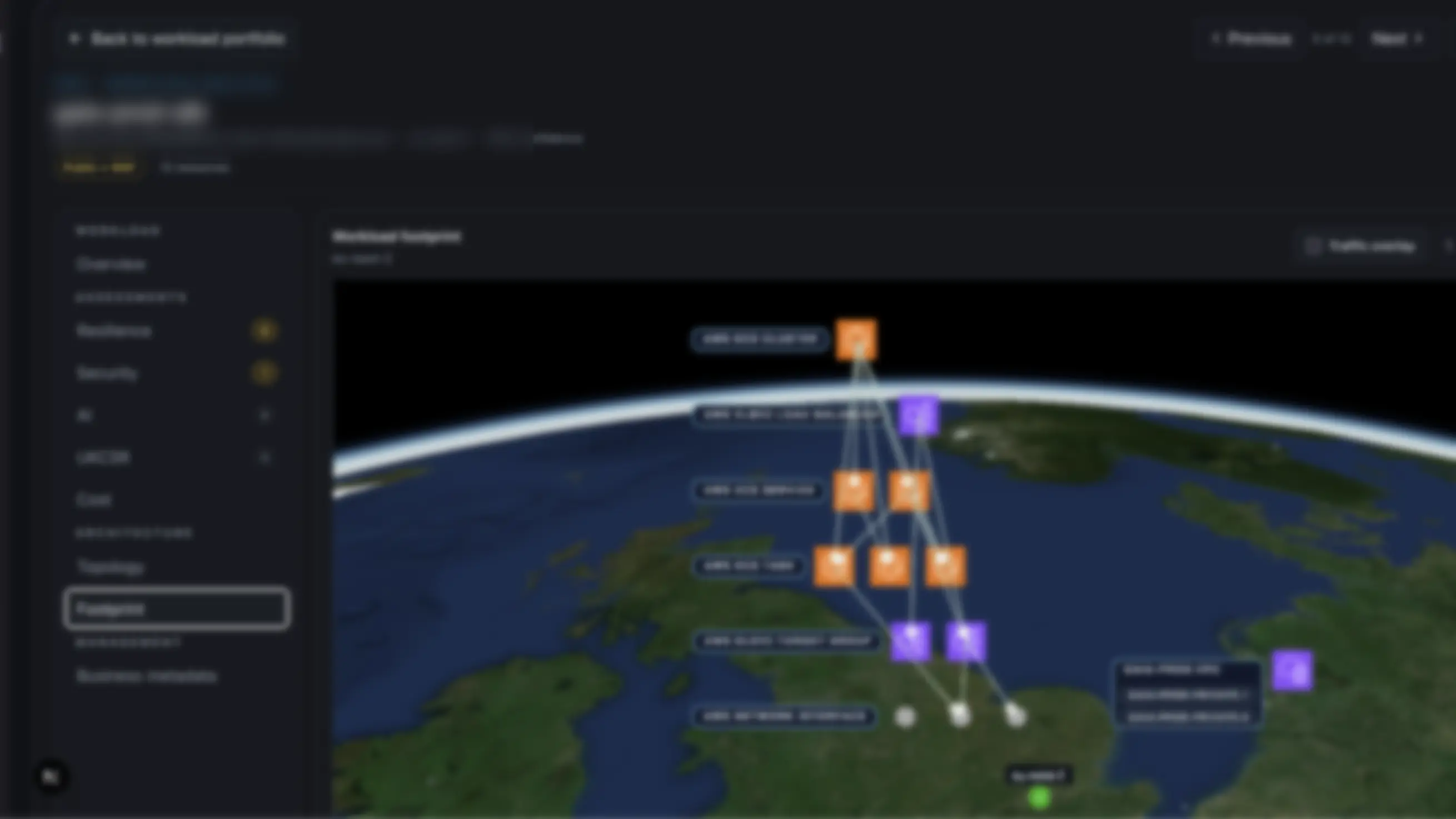
We talk about creating resources in the "Cloud", but every one of these resources runs on real hardware, somewhere on terra firma.
Where that somewhere is, matters. What it connects to, matters. Who can access it, matters.
While other tools show you a slice of your IT estate, GAIA analyses everything through a single lens: every Account, Subscription, Resource, and Identity, correlated into one picture. It provides the information you need, without drowning you in noise. GAIA does this by focussing on the "Six Questions".
What do we have?
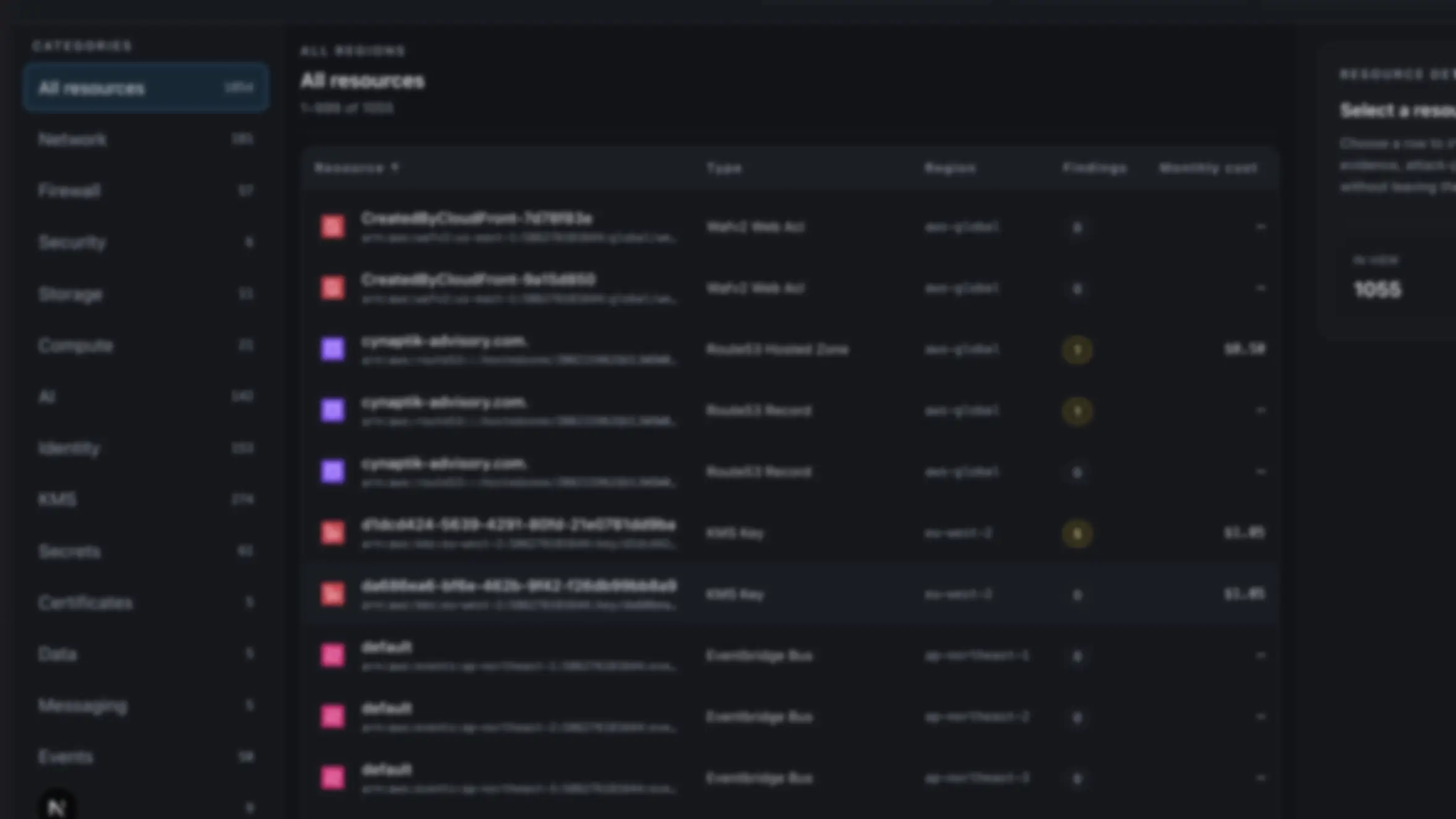
Every account and subscription discovered, every resource inventoried and classified continuously, not as a quarterly spreadsheet. If it exists in your estate, GAIA knows it and understands how it has been configured.
Why do we have it?
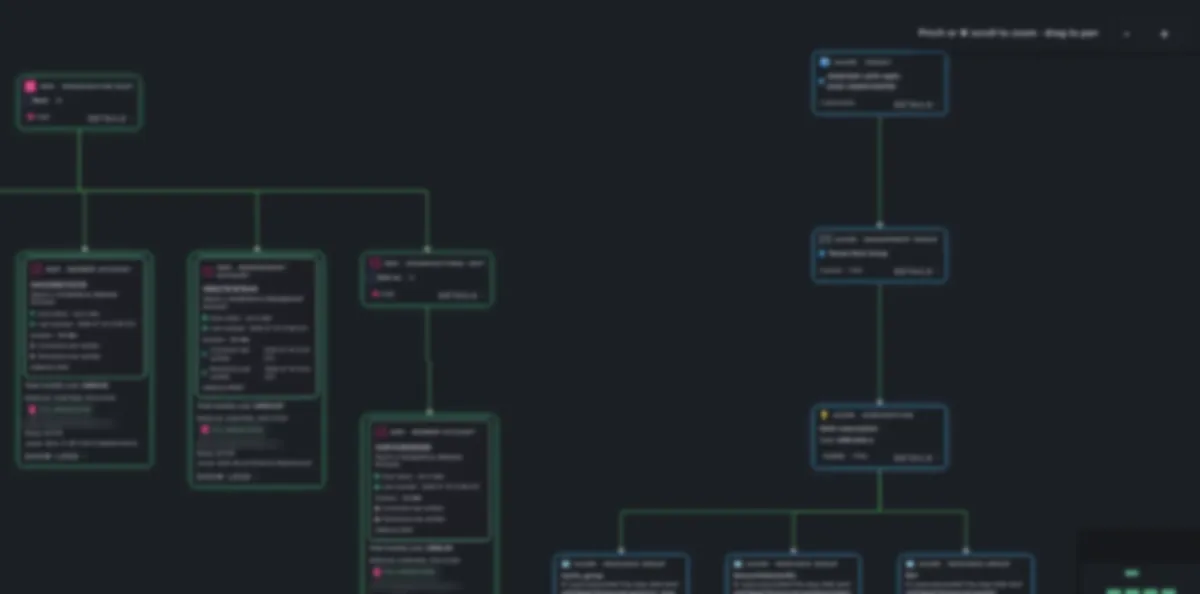
Resources do not exist in your Production environment in isolation. An API Gateway is pointless without something to integrate with, a load balancer exists to forward traffic to something, and a virtual disk needs to be attached to a VM to be useful. In other words, resources exist because they are part of a wider Workload. GAIA sees this and assembles resources into the subgraph they serve, so every bucket, IAM role, and database carries purposeful context.
Is it compliant?
Each cloud resource is a small configuration space, and as the number of resources grows, so does the surface that can be misconfigured. The attributes of each resource are checked on every scan against Security, Resilience, and UKCSR criteria by default, with the option to define custom rules. GAIA tells you which resources are defined optimally, and which fall short, at the Resource, Workload, Account, Provider, and Estate level.
What is the associated cost?
Each resource carries an associated cost that contributes to the total IT spend. This is attributed at the Resource, Workload, Account and Estate-wide level, so cost sits beside risk and purpose, not in a separate tool. One view, one terminology.
What can access it?
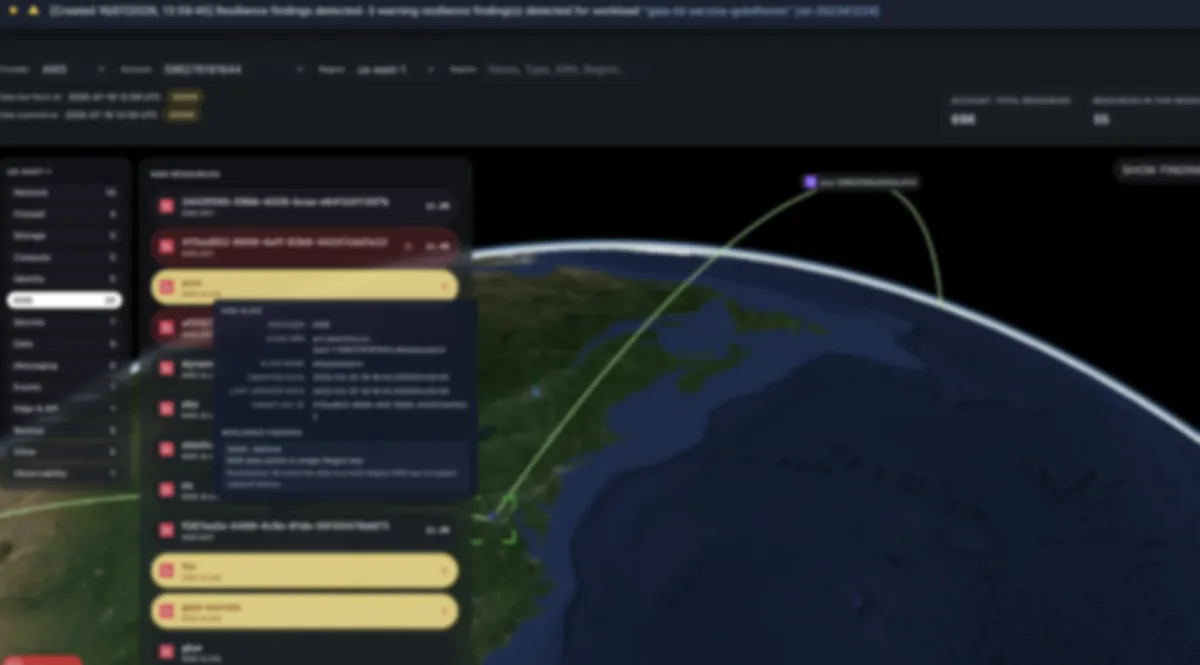
Resources interact across two conceptual graphs at once: identity (defined by the Cloud provider's RBAC) and network (defined by IP network participation). GAIA traces both together, surfacing all potential paths from the public internet across each resource hop to your sensitive data, whether a link is an identity grant, a role assumption, or packet-level network reachability over TCP/IP. What you see is the complete chain, not a list of isolated misconfigurations.
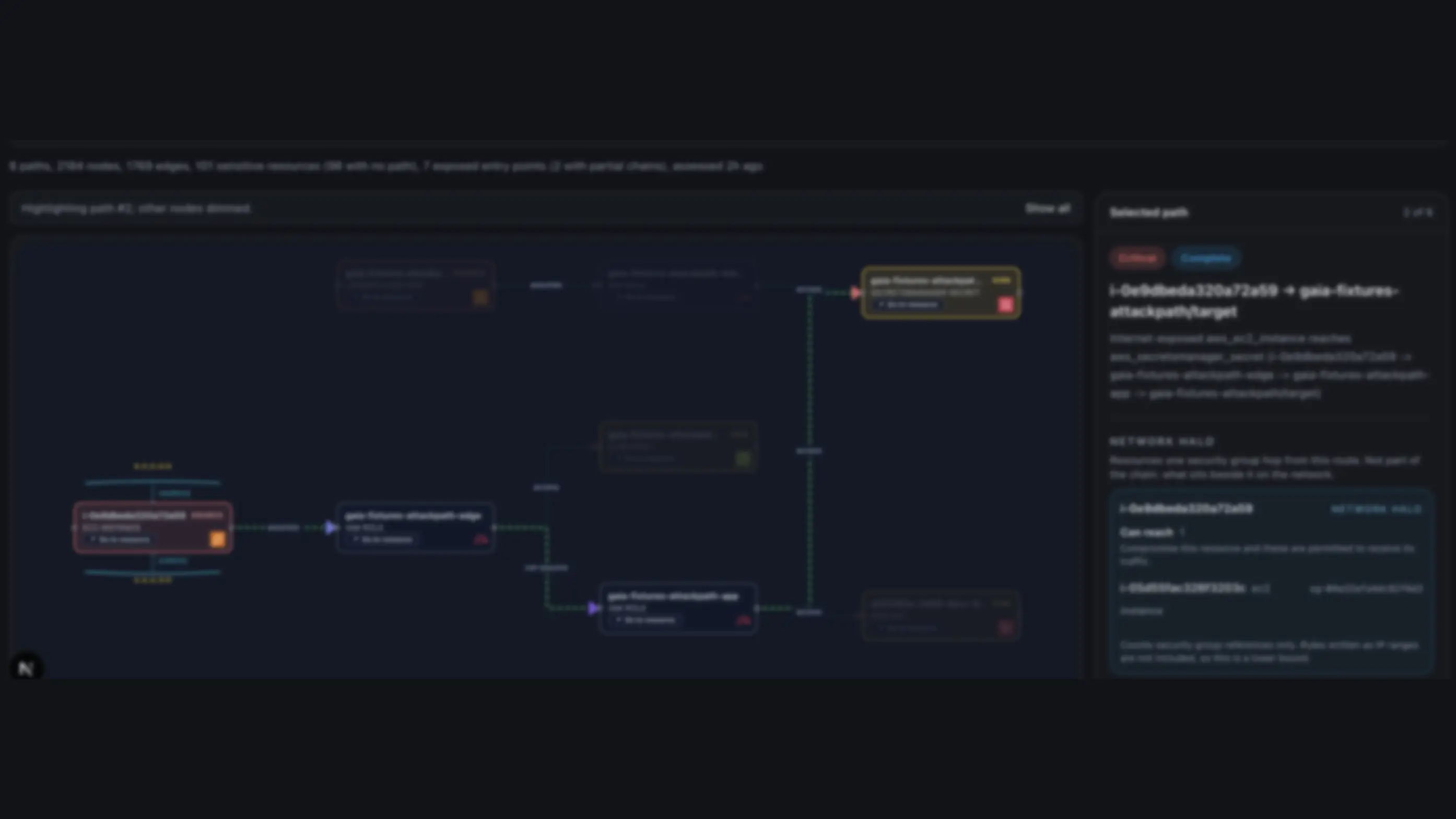
What has accessed it?
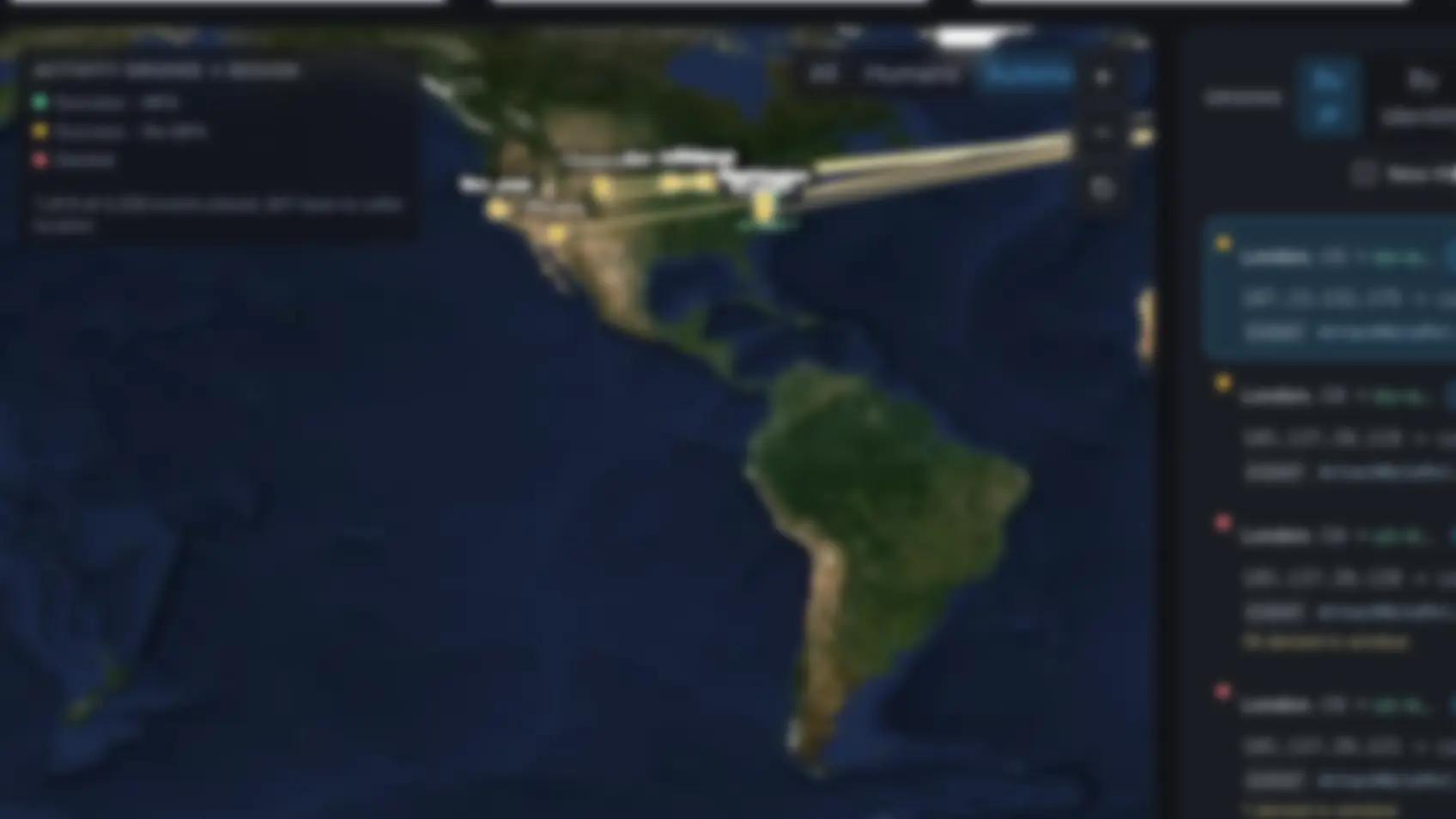
Could and did are different questions. GAIA watches which principals have actually exercised those paths: which identities have established sessions, sign-ins, assumed roles, read secrets, and where in the IP space they originated.
When combined with GAIA's Network activity Graph, a single page shows which attack paths have been traversed, by whom, which permissions they used, and which network activity was generated during the session.
And your AI?
GAIA discovers the models, agents, and AI services running across your accounts, including the ones nobody registered, and asks the same Six Questions of them. Inbound traffic matching known LLM patterns is flagged. Seeing the agentic landscape is the first step to defending it.
UK made. UK managed. Data sovereignty by design.